Karpooravalli Banana: Real Benefits, and Why It Won't Raise Your Haemoglobin or Strengthen Bones
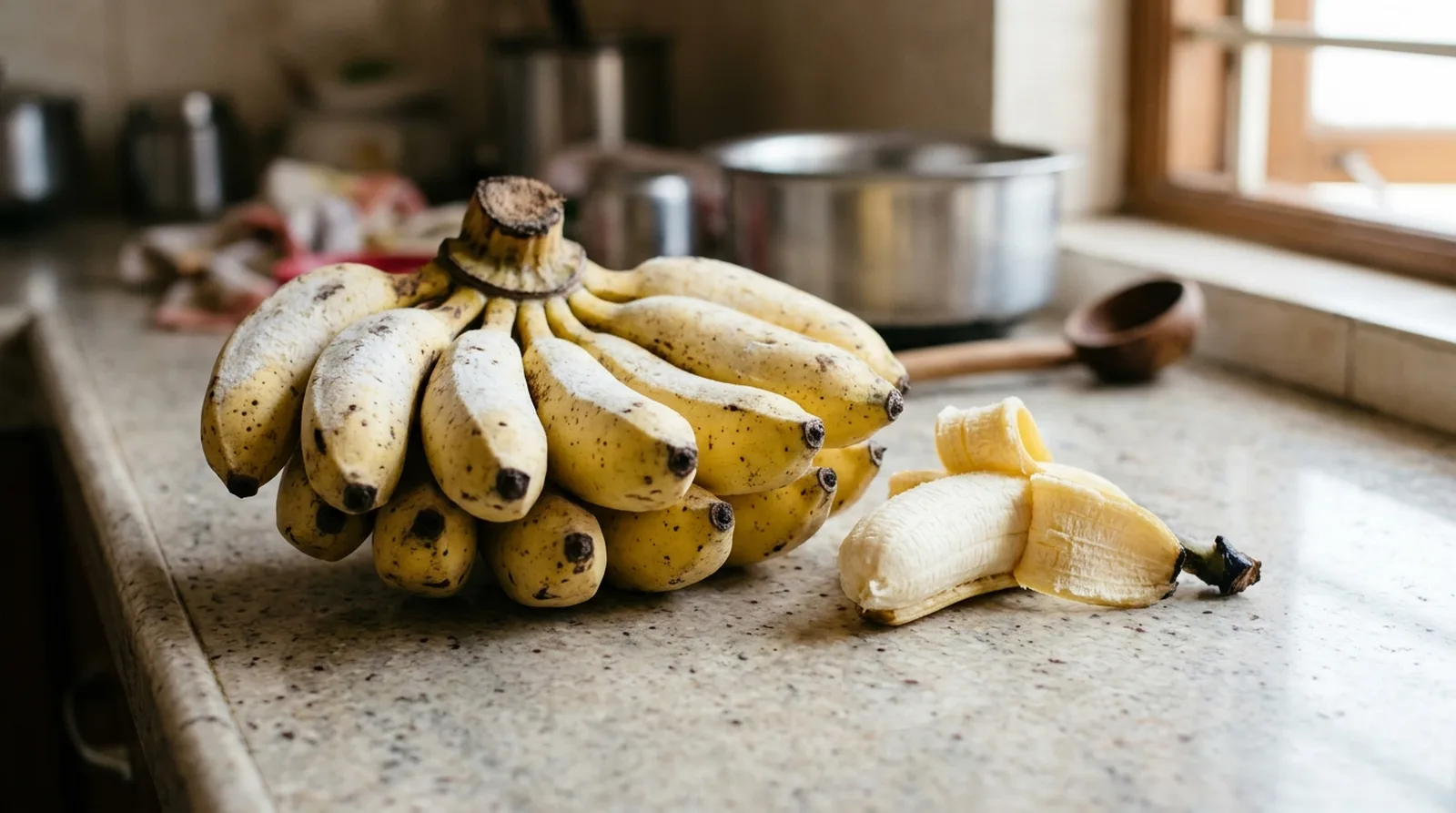
Karpooravalli, also called thaen vazhai, is one of Tamil Nadu's favourite bananas: sweet, fragrant and slow to spoil. Social media credits it with raising haemoglobin, strengthening bones, improving memory and stopping hair fall. Some of that rests on real nutrition; much of it does not. Here is what one banana actually gives you.
- Vitamin B620 %
- Potassium10 %
- Iron1 %
- Calcium1 %
In this guide
Quick answer
- Good for: quick energy, potassium (about a tenth of a day's need), vitamin B6 (about a fifth) and some fibre.
- Blood pressure: more potassium from food lowers BP; a banana helps, but less salt matters more.
- Not a source of iron or calcium: about 1% of a day's iron and under 1% of calcium. It will not raise haemoglobin or build bones.
- Serotonin in bananas doesn't reach the brain; no good evidence for better sleep or memory.
- Acidity, body heat, hair fall: no good evidence for the claims.
- Diabetes: one small banana with a meal. Kidney disease: ask your doctor first.
Karpooravalli is a sweet, fragrant banana grown widely in Tamil Nadu and also in Andhra Pradesh, Bihar and the North East. It belongs to the ABB group of bananas, has a thin, ash-dusted skin and keeps longer than many varieties. Its other name, thaen vazhai (honey banana), describes its sweetness. Below, each popular claim is checked against nutrition data and research.
What one banana actually gives
Separate, reliable nutrient tables for karpooravalli are limited, so these figures use standard data for raw banana.
| Per 100 g of fruit (about one medium banana) | Amount | Share of a day's need |
|---|---|---|
| Potassium | about 358 mg | about 10% |
| Vitamin B6 | about 0.37 mg | about 20% |
| Fibre | about 2.6 g | about a tenth of a typical target |
| Iron | about 0.26 mg | about 1% |
| Calcium | about 5 mg | about 0.5% |
The chart above shows the same thing. A banana is a good source of potassium and vitamin B6 and a modest source of fibre. It is not a meaningful source of iron or calcium, whatever the variety.
Heart and blood pressure: the claim that holds up
WHO's guideline says that increasing potassium intake from food significantly lowers blood pressure in adults, and it recommends at least 3,510 mg of potassium a day. A banana contributes about a tenth of that.
The best results come from the whole pattern: less salt, plenty of vegetables, fruit, pulses and curd, regular activity and taking prescribed medicines. One caution: people with kidney disease or on medicines that raise potassium may need to limit bananas; see the kidney section in our red banana guide.
Iron, haemoglobin, bones and teeth
"Raises haemoglobin." One banana gives about 0.26 mg of iron, while adults need roughly 19 mg or more a day under Indian guidance. Even several bananas will barely move your iron intake. Anaemia is common in India, and it needs real iron sources, such as greens, pulses, ragi and other millets, meat, fish or eggs, eaten with vitamin C foods like amla or lemon, and often iron tablets advised by a doctor after a blood test.
"Strengthens bones and teeth through calcium." A banana has about 5 mg of calcium, against ICMR-NIN's recommendation of 1,000 mg a day for adults. Calcium comes mainly from milk, curd, ragi, sesame, greens and small fish eaten with bones.
Brain, mood and sleep
- Serotonin: bananas do contain serotonin, but serotonin from food does not cross the blood-brain barrier, so it does not act on mood or the brain directly. Bananas also have a little tryptophan, which the body uses to make serotonin, in small amounts.
- Sleep: there is no good evidence that a banana improves sleep. If hunger keeps you up, a light snack is fine.
- Memory: vitamin B6 is needed for normal brain function, and a banana provides some, but there is no evidence that eating bananas improves memory in healthy people.
Digestion, acidity and "body heat"
- Constipation: a banana gives about 2.6 g of fibre. Together with water, vegetables, whole grains and pulses, it helps; one banana alone won't fix long-standing constipation.
- Acidity and ulcers: a ripe banana is a soft, low-acid food that many people with acidity tolerate well. But there is no good human evidence that it heals ulcers. Persistent burning, pain, vomiting or black stools need a doctor.
- "Cools the body" and stops hair fall: these are traditional beliefs without scientific support. Hair fall needs its cause found: iron deficiency, thyroid problems, stress, recent illness or hereditary thinning are common ones.
Diabetes: one small banana, with a meal
Karpooravalli is one of the sweeter bananas. People with diabetes can usually still eat it, with care:
- One small banana at a time, counted in your meal's carbohydrate.
- With curd, nuts or a meal, not alone on an empty stomach.
- Just ripe rather than very soft and overripe; riper bananas raise sugar faster.
- Check your sugar after eating it a few times, and follow your doctor's or dietitian's plan.
Final word
Karpooravalli is a delicious, long-keeping banana and a good everyday source of quick energy, potassium and vitamin B6. As part of a low-salt diet rich in vegetables and fruit, it supports healthy blood pressure. But it will not raise haemoglobin, build bones, sharpen memory, cool the body or stop hair fall. Enjoy it as fruit, and take real symptoms to a doctor.
This article is general health information, not medical advice. It does not replace consultation with a doctor or dietitian. Nutrient values vary with variety, size and ripeness.
References
- ICAR National Research Centre for Banana: Karpuravalli cultivar
- WHO eLENA: Increasing potassium intake to reduce blood pressure in adults
- Down To Earth: ICMR-NIN 2020 requirements, including calcium
- Medical Dialogues fact check: Can bananas cure depression? (serotonin and the brain)
- Healthline: Bananas and diabetes
- Nutrition Advance: Banana nutrition (USDA figures)
How we made this guide
- Facts checked against 6 sources, listed at the end of the guide.
- Worked examples and calculations are our own, with the assumptions stated in the guide.
- Last updated November 5, 2026. We revise guides when rules and prices change.
Frequently asked questions
What is karpooravalli banana?
Karpooravalli is a banana variety popular in Tamil Nadu, Andhra Pradesh, Bihar and the North East. It belongs to the ABB group, has sweet, fragrant flesh and skin with a light ash-like coating, and keeps longer than many bananas. It is also called thaen vazhai, which simply refers to its honey-like sweetness.
Does karpooravalli banana increase haemoglobin?
Not meaningfully. A banana has only about 0.26 mg of iron per 100 g, roughly 1% of an adult's daily need. To raise haemoglobin, people with anaemia need iron-rich foods such as greens, pulses, millets like ragi, meat or fish, often iron tablets prescribed by a doctor, and a check of the cause.
Is karpooravalli banana good for blood pressure?
It can help as part of the overall diet. WHO says increasing potassium from food lowers blood pressure in adults and recommends at least 3,510 mg a day. One banana gives about a tenth of that. Cutting salt and eating plenty of vegetables, fruit and pulses matter more than any single fruit.
Can people with diabetes eat karpooravalli?
Usually yes, in a small portion. It is one of the sweeter bananas, so eat one small banana at a time, preferably with a meal or with curd or nuts, count it in your carbohydrate, and check your sugar to see how you respond. Follow your doctor's or dietitian's plan.
Does eating a banana at night help sleep?
There is no good evidence that a banana improves sleep. Bananas contain small amounts of tryptophan and magnesium, but not enough to act like a sleep aid. A light snack is fine if hunger keeps you awake; regular sleep times and less screen time at night help more.
Does karpooravalli banana stop hair fall or reduce body heat?
There is no scientific evidence for either. 'Body heat' is a traditional idea rather than something a banana measurably changes. Hair fall has many causes, including iron deficiency, thyroid problems, stress, illness and hereditary thinning; a doctor or dermatologist can help find the cause.