Car Body Cover Buying Guide: Which Type You Need, and the Mistakes That Scratch Your Paint
A ₹800 cover and a ₹3,000 cover look alike in an online photo. On a car parked in open sun and rain, the difference shows within months, and a wrong cover can even scratch the paint it is meant to protect. Here is how to choose for where and how you park.
In this guide
- Quick answer
- First, do you need one?
- Types of cover, compared
- Waterproof, water-resistant and breathable
- Colour matters in the sun
- Fit: check your exact model and year
- How a cover scratches paint, and how to avoid it
- Find the right cover for your parking
- Before you order online
- Final word
- Frequently asked questions
Quick answer
- Covered parking: a thin, breathable dust cover is enough.
- Open sun and rain: a water-resistant, breathable cover with a soft inner lining, in silver or a light colour.
- "100% waterproof" is not always better: a cover that can't breathe can trap moisture under it.
- Fit for your exact model and year: a 2019+ model may differ in size from the older one.
- Scratches come from dust and wind: dust the car first and use the underbody strap.
- Daily driver? A sunshade or a top cover may be more practical than a full cover.
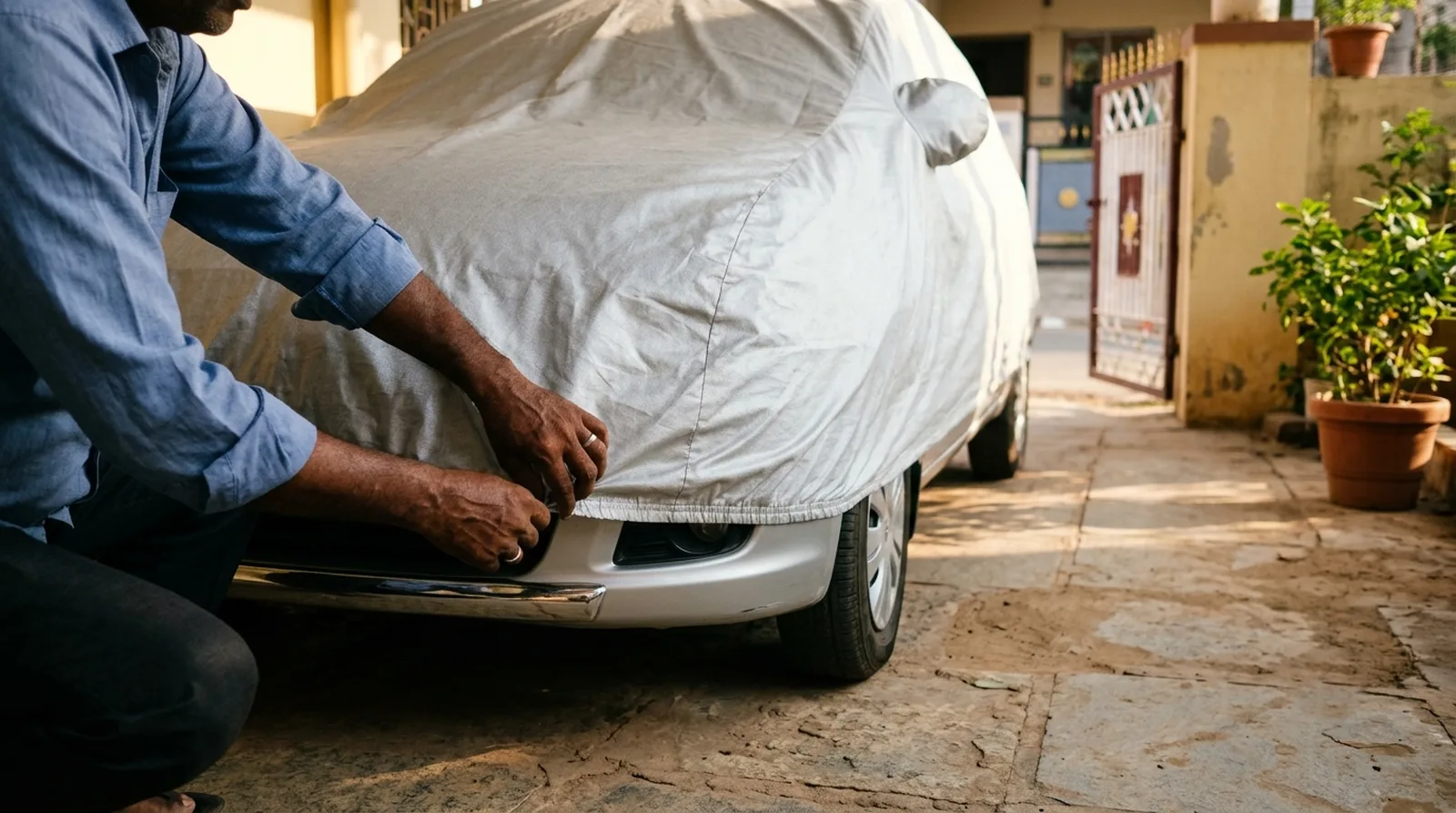
A car cover is meant to keep sun, dust, bird droppings and rain off the paint. A good one does that. A poor one fades in a few months, flaps in the wind, holds moisture against the body, or rubs grit into the paint. The difference is mostly in four things: the fabric, the colour, the fit and how you use it.
First, do you need one?
- Covered garage or basement: a light dust cover keeps the car clean, but it is optional.
- Open parking, used daily: a full cover helps against sun, but many people stop using it within weeks because it takes time twice a day and gets dirty. Be honest about whether you will use it.
- Open parking, used weekly or less: this is where a good cover pays off most.
- Parked for weeks or months: a quality breathable cover is well worth it.
Types of cover, compared
| Type | Rough online price (2026) | Best for |
|---|---|---|
| Thin single-layer polyester (often silver) | often under ₹1,000 | Dust in covered parking; short-term use |
| Coated, water-resistant fabric with softer lining | about ₹1,000–₹2,500 | Open parking with sun and light rain |
| Multi-layer (water-resistant outer, breathable middle, soft inner) | usually above ₹2,500 | Long outdoor parking, heavy monsoon, long storage |
Prices vary widely by seller, size and offers; treat these as rough bands seen in online listings, not quotes.
Waterproof, water-resistant and breathable
Online listings use these words loosely:
- Water-resistant: sheds light rain and drizzle; heavy, long rain can soak through.
- Waterproof: blocks water, but if the fabric does not breathe, moisture from the ground, humidity or a damp car gets trapped underneath. That is bad for paint and can encourage rust and mould.
- Breathable: lets water vapour escape. For a car parked outdoors in a humid climate, water-resistant + breathable usually beats "fully waterproof".
If the listing does not say whether the cover breathes, assume it may not.
Colour matters in the sun
A black or dark cover absorbs more heat in open sun and gets much hotter on top of the car. For open parking, a silver or light-coloured cover is the safer choice. Whatever the colour, look for a UV-resistant fabric: sunlight is what makes cheap covers fade, turn brittle and tear. Indoors or in shade, colour doesn't matter much.
Fit: check your exact model and year
- Model generation: many cars changed size between generations. A cover made for the older body may be short or loose on the newer one. Ask the seller in writing whether it fits your model and year.
- Custom-fit vs universal: "universal" covers are sized by length (S, M, L). They are cheaper but usually looser, and a loose cover flaps and rubs.
- Features that help: mirror pockets, elastic hem front and back, an underbody strap or buckle, and an antenna opening if your car has a fixed antenna.
How a cover scratches paint, and how to avoid it
- Dust the car before covering. Grit left on the paint is what the cover rubs in; see our home car wash guide.
- Use a soft inner lining; avoid rough, plasticky insides.
- Fasten the underbody strap so wind can't move the cover.
- Never cover a wet car; let it dry first.
- Wait a few minutes after a drive before covering, so hot parts cool.
- Wash the cover when its inside gets dirty, following the label; a dirty lining is sandpaper.
- Fold it inside-out when storing, so the dirty outside doesn't touch the inside.
Find the right cover for your parking
Which cover suits you?
Before you order online
- Product reviews, not just seller rating: a seller's overall rating says little about this one item. Read the item's reviews and look at buyers' photos of the cover on a car.
- Material named clearly: the listing should state the fabric and whether it has a lining. Vague words like "premium" or "heavy" mean nothing on their own.
- Model and year confirmed in the listing or in writing from the seller.
- Return policy for wrong size: check that a size or fit problem is accepted for return, and keep the packaging until you have tried it.
- Compare across platforms: "lowest price" badges are marketing; the same type of cover may be cheaper elsewhere.
- Count the cost per year: a cheap cover replaced every few months can cost more over two years than a better one bought once.
Final word
Match the cover to how and where you park, not to the photo. Covered parking needs only a light dust cover. Open sun and rain call for a light-coloured, water-resistant cover that breathes, fits your exact model and straps down. Whatever you buy, a clean car under it is what saves the paint.
This guide is general information. It does not refer to any particular brand, seller or listing. Price bands are approximate and change often; check current listings and the seller's return terms before buying.
How we made this guide
- Facts checked against 3 sources, listed at the end of the guide.
- Last updated November 5, 2026. We revise guides when rules and prices change.
Frequently asked questions
Do car covers scratch the paint?
They can. Most scratches come from dust or grit left on the car, which the cover rubs into the paint when wind moves it. A loose fit, a rough inner surface and covering a dusty car make it worse. Dust the car first, choose a cover with a soft inner layer, and use the underbody strap so it doesn't flap.
Is a fully waterproof car cover better?
Not always. A completely non-breathable cover, such as plain PVC, can trap moisture and condensation underneath, which is bad for paint and can encourage rust and mould. For outdoor parking, a water-resistant cover that also breathes is usually the better choice.
Which colour car cover is best for Indian summers?
For a car parked in open sun, a silver or light-coloured cover reflects more heat than a black one. Whatever the colour, choose a UV-resistant fabric, because sunlight is what makes cheap covers fade and tear. Dark covers are fine indoors or in shade.
How much should I spend on a car cover?
As a rough guide to online prices in 2026: thin single-layer dust covers are often under ₹1,000; coated, water-resistant covers with a softer lining are around ₹1,000–₹2,500; multi-layer outdoor covers usually cost more. Spend more only if the car stays outdoors for long periods.
Should I use a car cover if I drive every day?
Many daily drivers find a full cover tiring to put on and take off twice a day, so it ends up unused. If you park in open sun, a windshield sunshade or a top or half cover may be more practical. A full cover pays off most when the car stands for long stretches.
Can I put a cover on a wet or hot car?
Avoid covering a wet car, because the moisture stays trapped underneath. Let rain or wash water dry first. Wait a few minutes after a drive so the bonnet and exhaust area are not very hot, especially with thin synthetic covers.