Amla (Gooseberry) Juice: What It Really Does, What Is Exaggerated, and How Much to Drink
Amla, or nellikkai, is one of the richest common sources of vitamin C, and a daily glass of its juice has become a popular morning ritual. Some claims made for it are well supported; others go far beyond the evidence. Here is what the research and nutrition data actually show, and how to take it sensibly.
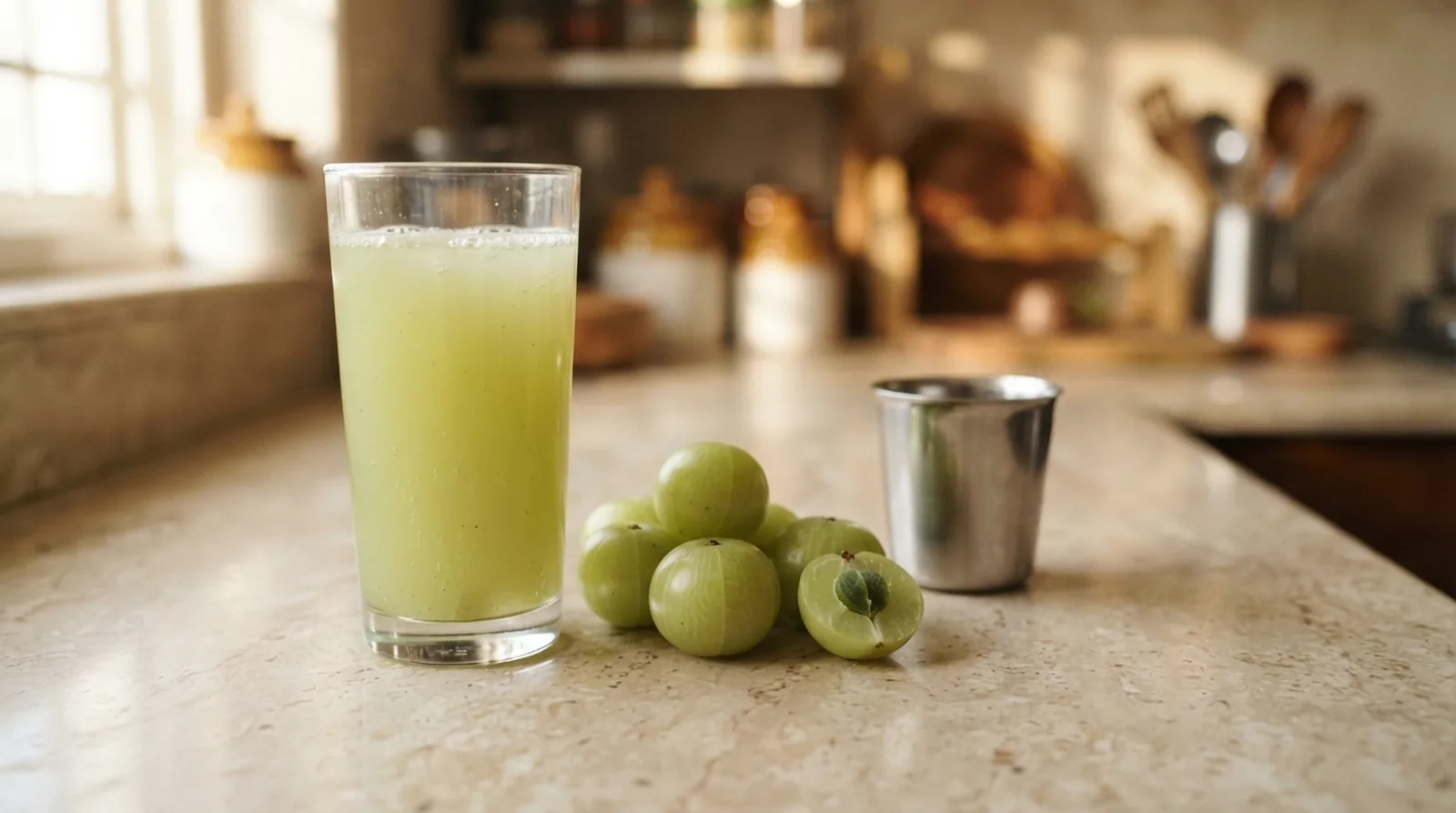
- 30 ml fresh amla juice90 mg
- 30 ml bottled juice, 9 months old36 mg
- 1 fresh amla (about 30 g)120 mg
- 1 medium orange70 mg
In this guide
Quick answer
- Vitamin C: fresh amla has about 193–720 mg per 100 g; 30 ml of fresh juice gives about 90 mg, close to a day's need. Stored bottled juice can lose about 60%.
- "Empty stomach" is not required, and can worsen acidity. For iron, take vitamin C with an iron-rich meal.
- Real evidence: small trials of amla supplements improved blood sugar and cholesterol over 3–12 weeks. Promising, not a replacement for medicines.
- Over-claimed: "clears arterial plaque", "detoxes the liver" and "200% of vitamin C from any bottle" are not shown in human studies.
- Sensible amount: 20–30 ml diluted, or one or two fresh amlas a day.
- Check with a doctor if you take blood thinners or diabetes medicines, or have acidity.
Amla (nellikkai) has a deserved reputation: it is one of the richest everyday sources of vitamin C and is full of plant compounds such as polyphenols. But many online claims treat a glass of juice as medicine for everything from immunity to arteries. Below, each common claim is checked against nutrition data and published human studies.
How much vitamin C you actually get
| Serving | Approximate vitamin C |
|---|---|
| 30 ml fresh amla juice (about 300 mg per 100 ml) | about 90 mg |
| 30 ml bottled juice after 9 months of storage | about 36 mg |
| 1 fresh amla, about 30 g | about 60–215 mg |
| 1 medium orange | about 70 mg |
Our calculations from published figures; the chart above shows the same comparison.
What this means:
- Indian adults need roughly 65–80 mg of vitamin C a day. A small serving of fresh amla or juice covers it.
- Amla is richer than an orange, often several times richer per 100 g, but the "8 to 20 times" figure depends heavily on the variety and freshness.
- Freshness matters. A study of pasteurised amla juice found vitamin C fell from about 300 to 120 mg per 100 ml over nine months of storage, a loss of about 60%. The "over 200% of your daily need in 30 ml" claim applies only to very fresh, high-vitamin juice.
The "empty stomach" claim
Many videos say amla juice must be taken first thing in the morning on an empty stomach for "peak absorption". The evidence does not support this:
- Vitamin C is absorbed well with or without food. There is no good evidence that an empty stomach makes a meaningful difference.
- Iron needs vitamin C at the same meal. Vitamin C helps the body absorb iron from plant foods, but only when they are eaten together. Juice taken hours before breakfast does little for the iron in your lunch. If you want this benefit, have amla with an iron-containing meal such as greens, dal or millets.
- Acidity: amla is sour. For people with gastritis or reflux, a glass on an empty stomach can bring on burning or discomfort.
Take it at whatever time suits your stomach.
What studies show, and what they don't
Reasonably supported (but early):
- A 2023 meta-analysis of five randomised trials found that amla supplementation lowered fasting blood sugar, LDL and total cholesterol and triglycerides, raised HDL, and reduced the inflammation marker CRP, over 3 to 12 weeks.
- The authors called the results promising but said more research is needed. The trials were small and short, and most used standardised extracts or powders, not juice made at home.
Not established in people:
- "Reverses arterial plaque buildup."
- "Detoxifies the liver."
- "Activates white blood cells to prevent seasonal infections" beyond what any adequate vitamin C intake does.
- Specific claims about hair regrowth or skin brightening from drinking the juice.
Vitamin C is genuinely needed for immunity and for collagen in skin and joints, but once your daily need is met, extra amounts do not keep adding benefit.
A sensible way to take it
- Prefer fresh: one or two fresh amlas, or juice made and drunk the same day.
- Amount: about 20–30 ml of juice mixed into a glass of water is enough for most adults.
- Timing: any time; with a meal if you have acidity or want to help iron absorption.
- Bottled juice: read the label; avoid added sugar and choose products with only amla and water.
- Don't heat it: boiling destroys vitamin C. Add amla to cooked dishes at the end, or eat it raw or pickled lightly.
- Rinse your mouth with water afterwards; the acid is hard on tooth enamel over time.
Side effects and who should be careful
- Acidity, loose stools and cramps if you take too much; very high vitamin C intake from supplements, above about 2,000 mg a day, is linked to diarrhoea and nausea.
- Blood thinners and antiplatelet drugs: amla may add to their effect; check with your doctor, and stop before surgery if advised.
- Diabetes medicines: amla may lower blood sugar further; monitor your sugar if you start it regularly.
- Iron overload conditions such as haemochromatosis: high vitamin C can worsen iron build-up.
- Pregnancy and breastfeeding: eating amla as food is common, but ask your doctor before concentrated juices or supplements.
Final word
Amla is an excellent, inexpensive source of vitamin C, and early trials suggest real benefits for blood sugar and cholesterol. You do not need to drink it on an empty stomach, more is not better, and fresh beats bottled. Treat it as a healthy food, not a cure: one or two fresh amlas or a small diluted glass a day is plenty. If you have a medical condition or take regular medicines, talk to your doctor first.
This article is general health information, not medical advice. It does not replace consultation with a doctor or dietitian. Nutrient values vary by variety, freshness and preparation, and the serving figures are our own calculations from published data.
References
- PubMed: The impact of Emblica officinalis (amla) on lipid profile, glucose and CRP, systematic review and meta-analysis (2023)
- PMC: Effect of pasteurisation and storage on quality of aonla (amla) juice
- News-Medical: Amla health benefits, from vitamin C to the evidence
- NIH Office of Dietary Supplements: Vitamin C fact sheet
- WebMD: Amla, uses, safety and interactions
How we made this guide
- Facts checked against 5 sources, listed at the end of the guide.
- Worked examples and calculations are our own, with the assumptions stated in the guide.
- Last updated November 5, 2026. We revise guides when rules and prices change.
Frequently asked questions
How much vitamin C does amla juice contain?
Fresh amla contains roughly 193–720 mg of vitamin C per 100 g, depending on the variety. Fresh juice has been measured at about 300 mg per 100 ml, so a 30 ml serving gives about 90 mg, close to an adult's daily need. Vitamin C breaks down with time, heat and exposure to air; stored bottled juice has been found to lose about 60% over nine months.
Is it better to drink amla juice on an empty stomach?
There is no good evidence that an empty stomach improves vitamin C absorption; it is absorbed well with or without food. For people with acidity or reflux, a sour juice on an empty stomach can make symptoms worse. And to help iron absorption, vitamin C works best when taken with an iron-containing meal, not hours before it.
Does amla juice reduce cholesterol and blood sugar?
A 2023 meta-analysis of five randomised trials found that amla supplements lowered fasting blood sugar, LDL and total cholesterol and triglycerides and raised HDL over 3–12 weeks. The trials were small and short and mostly used standardised extracts or powders, not home juice, so amla can support but not replace prescribed treatment.
How much amla juice can I drink a day?
For most healthy adults, about 20–30 ml of juice diluted in a glass of water, or one or two fresh amlas, is a sensible daily amount. More is not better: excess can cause acidity, loose stools or stomach cramps.
Who should be careful with amla juice?
People taking blood thinners or antiplatelet drugs, those with bleeding disorders or upcoming surgery, people on diabetes medicines (blood sugar may fall further), those with acidity or reflux, and pregnant or breastfeeding women should check with their doctor first.
Is fresh amla better than bottled amla juice?
Usually yes. Fresh amla or juice made and drunk the same day keeps the most vitamin C. Many bottled juices also contain added sugar, salt or preservatives; read the label and choose one with only amla and water if you buy it.