Wood vs uPVC vs Aluminium Windows: Which Is Best for Your Home?
Aluminium is the favourite for big modern glass walls, uPVC keeps homes quieter and cooler for less money, and wood still wins on warmth and character. The right choice depends on your room, your budget and how close you live to the sea.
In this guide
Quick answer
- uPVC: best all-rounder for most homes. Good heat and sound insulation, no rust near the sea, moderate price (about ₹450–850 per sq ft).
- Aluminium: best for large glass, slim frames and modern looks. Very strong and long-lasting, but frames conduct heat.
- Wood: best for traditional warmth and character, but costs more (from about ₹1,000 per sq ft) and needs regular care against moisture and termites.
Windows are a big share of a home's finishing budget, and you live with them for decades. Picking the material only by looks or by one person's recommendation can lead to hot rooms, noisy bedrooms or rusting frames. Here is how the three compare.
At a glance
| Feature | Wood | uPVC | Aluminium |
|---|---|---|---|
| Price per sq ft (approx.) | From ₹1,000; ₹1,000–3,000+ | ₹450–850 standard; up to ₹1,400+ premium | ₹300–550 basic; ₹450–950 system; sliding systems up to ₹1,800+ |
| Heat insulation | Good | Good | Poor unless thermally broken |
| Sound insulation | Good | Very good | Fair |
| Strength and big glass | Limited | Good (steel-reinforced) | Excellent |
| Near the sea | Needs care against moisture | No rust | Needs marine-grade finish |
| Maintenance | High: polish, termites, warping | Low: wipe clean | Low: clean tracks, lubricate |
| Typical life | Long if maintained | About 20–35 years | 40+ years |
Prices are approximate 2026 ranges and usually include fabrication and fitting. Get local quotes.
Wooden windows
Why people choose them: a warm, classic look that suits traditional and many modern homes, and wood can be made in almost any style: sliding, casement, folding or top-hung.
What to watch:
- Cost: generally the most expensive, especially in quality hardwood.
- Moisture and termites: wood can swell, warp and rot, and needs termite treatment and regular polish or paint.
- Seasoning: use well-seasoned wood, or frames can warp within a year or two.
Good fit for: the main door and a few feature windows, if you love the look and accept the upkeep.
uPVC windows
Why people choose them: uPVC frames have a steel reinforcement inside for strength. They insulate heat and sound well, don't rust and need only a wipe to clean.
What to watch:
- Quality varies widely. Cheap profiles can yellow and warp in strong sun. Ask for UV-stabilised profiles from a reputed maker, with galvanised steel reinforcement.
- Fire: uPVC is harder to ignite than wood and puts itself out when the flame is removed, but it gives off heavy smoke if it does burn. This is a reason to buy quality material and follow normal fire safety, not a reason to avoid it altogether.
- Very large spans: for floor-to-ceiling glass walls, aluminium is stronger.
Good fit for: bedrooms, street-facing rooms, coastal homes and most budget-conscious builds.
Aluminium windows
Why people choose them: slim, sleek frames that hold very large panes of glass, including floor-to-ceiling openings of 14–15 ft. They are very strong, secure, come in many configurations and stand up well to storms.
What to watch:
- Heat: aluminium conducts heat. Plain frames pass more heat into the room than uPVC or wood. Thermally broken systems reduce this, at a higher price.
- Basic vs system windows: the cheapest "domal" sections are very different from engineered system windows with proper seals and hardware. Compare like with like.
- Near the sea: insist on a high-grade powder coat or anodised finish and stainless-steel hardware.
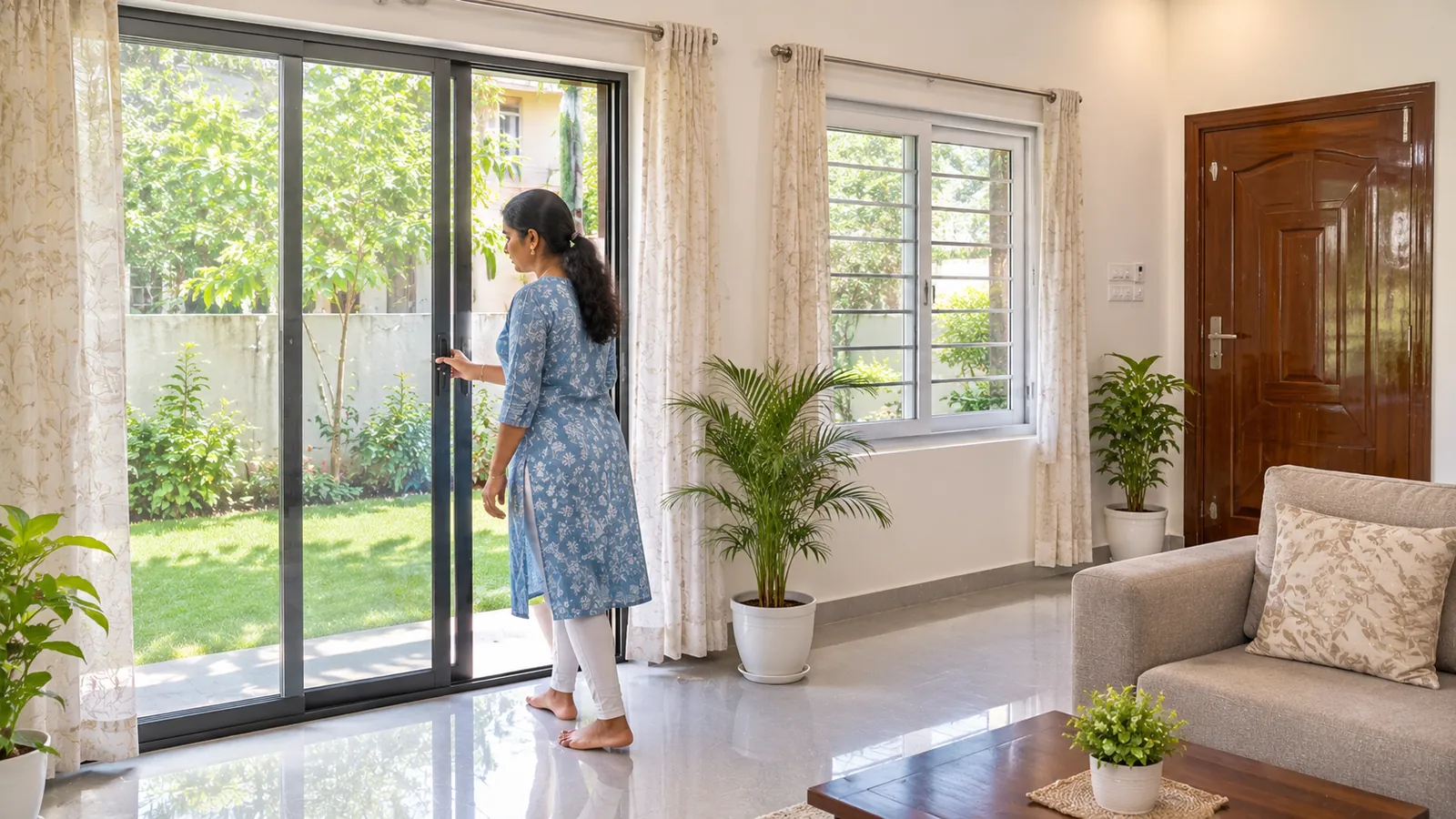
Good fit for: large sliding doors to balconies or gardens, modern facades and big living-room glass.
Which should you choose?
| Room or situation | Best choice |
|---|---|
| Bedrooms and rooms facing a busy road | uPVC |
| Large sliding doors and glass walls | Aluminium |
| Home near the sea | uPVC, or aluminium with a marine-grade finish |
| Tight budget | uPVC, or basic aluminium for utility areas |
| Traditional look or main entrance | Wood |
| Very hot, sunny rooms | uPVC or wood; avoid plain aluminium with large glass |
Mixing is normal. Many homes use a wooden main door, uPVC windows in bedrooms and aluminium sliding doors in the living room.
Before you order
- Ask for a sample corner piece to check frame thickness and finish.
- Confirm the glass: thickness, toughened or not, single or double glazing.
- Check the hardware: rollers, handles and locks from a known brand; stainless steel near the coast.
- Insist on mosquito mesh in the quote if you need it.
- Compare quotes per sq ft with the same glass and hardware, not just the frame.
- Ask about warranty for the profile, hardware and installation separately.
Maintenance tips
- Sliding tracks: vacuum or brush out dust and grit regularly; grit wears out rollers.
- Rollers and hinges: a light lubricant or silicone spray keeps them smooth.
- uPVC: wipe with mild soap and water; avoid harsh solvents.
- Wood: re-polish or re-paint every few years and watch for termites.
Final word
For most Indian homes, uPVC is the best all-round value: quiet, cool, rust-free and reasonably priced. Choose aluminium where you want big glass and slim frames, and wood where traditional character matters and you can keep up with maintenance. Mixing materials room by room usually gives the best result for the money.
Prices are approximate 2026 ranges and vary by city, brand, glass and hardware. Get at least two quotes with identical specifications.
Frequently asked questions
Which window material is best for Indian homes?
There is no single best. uPVC suits most bedrooms and street-facing rooms because it insulates heat and sound well at a reasonable price. Aluminium suits large glass doors and modern facades. Wood suits homes where traditional looks matter and the budget allows.
What is the price of uPVC and aluminium windows per sq ft?
Standard uPVC windows cost about ₹450 to ₹850 per sq ft, premium ones up to ₹1,400 or more. Basic aluminium sections cost about ₹300 to ₹550, powder-coated or system windows ₹450 to ₹950, and aluminium sliding systems up to ₹1,800 or more. Wooden windows start around ₹1,000.
Are uPVC windows a fire risk?
uPVC is harder to ignite than wood and stops burning when the flame is removed. But when it does burn in a fire, it gives off heavy smoke. Buy good-quality uPVC from a reputed maker and follow normal fire-safety practices.
Which is better near the sea: uPVC or aluminium?
uPVC does not rust or corrode in salty air. Aluminium works too, but near the coast it needs a high-grade powder coat or anodised finish and stainless-steel hardware.
Do aluminium windows make rooms hot?
Aluminium conducts heat, so plain aluminium frames transfer more heat than uPVC or wood. Thermally broken aluminium systems reduce this but cost more. The glass size and type matter even more than the frame.
How do I maintain sliding windows?
Clean the tracks regularly to remove dust and grit, then use a light lubricant or silicone spray on rollers and hinges. For wood, re-polish or re-paint every few years to keep moisture out.