Car Wash Sponge or Microfibre Mitt? How to Wash Your Car at Home Without Scratching the Paint
A ₹100–₹200 wash mitt and a bucket can keep a car looking better than many paid washes, or they can slowly cover it in fine circular scratches. The difference is less about what you buy and more about how you use it. Here is what to buy and the routine that protects the paint.
In this guide
Quick answer
- Buy a microfibre or chenille mitt, not a flat sponge: it holds dirt in its fibres instead of dragging it across the paint.
- Rinse the car first, then wash top to bottom with the two-bucket method.
- Use car shampoo, not dish soap or washing powder, which can strip protection.
- Wash in the shade and dry promptly to avoid hard-water spots.
- Dropped the mitt? Don't put it back on the paint until it is properly cleaned.
- Keep a separate cloth for wheels.
Most fine scratches and swirl marks on a car's paint are not caused by bad roads. They come from washing: dust and grit dragged across the surface by a sponge or cloth. A cheap mitt used the right way is much safer than an expensive one used carelessly.
Sponge, chenille mitt or microfibre mitt
| Tool | How it treats paint | Verdict |
|---|---|---|
| Flat household sponge | Flat face can trap grit and rub it across the paint | Avoid on paint |
| Chenille mitt or pad (the "noodle" type) | Thick microfibre strands pull dirt into the pile | Good, affordable choice |
| Plush microfibre mitt | Dense, soft pile holds plenty of soapy water | Good; slightly gentler |
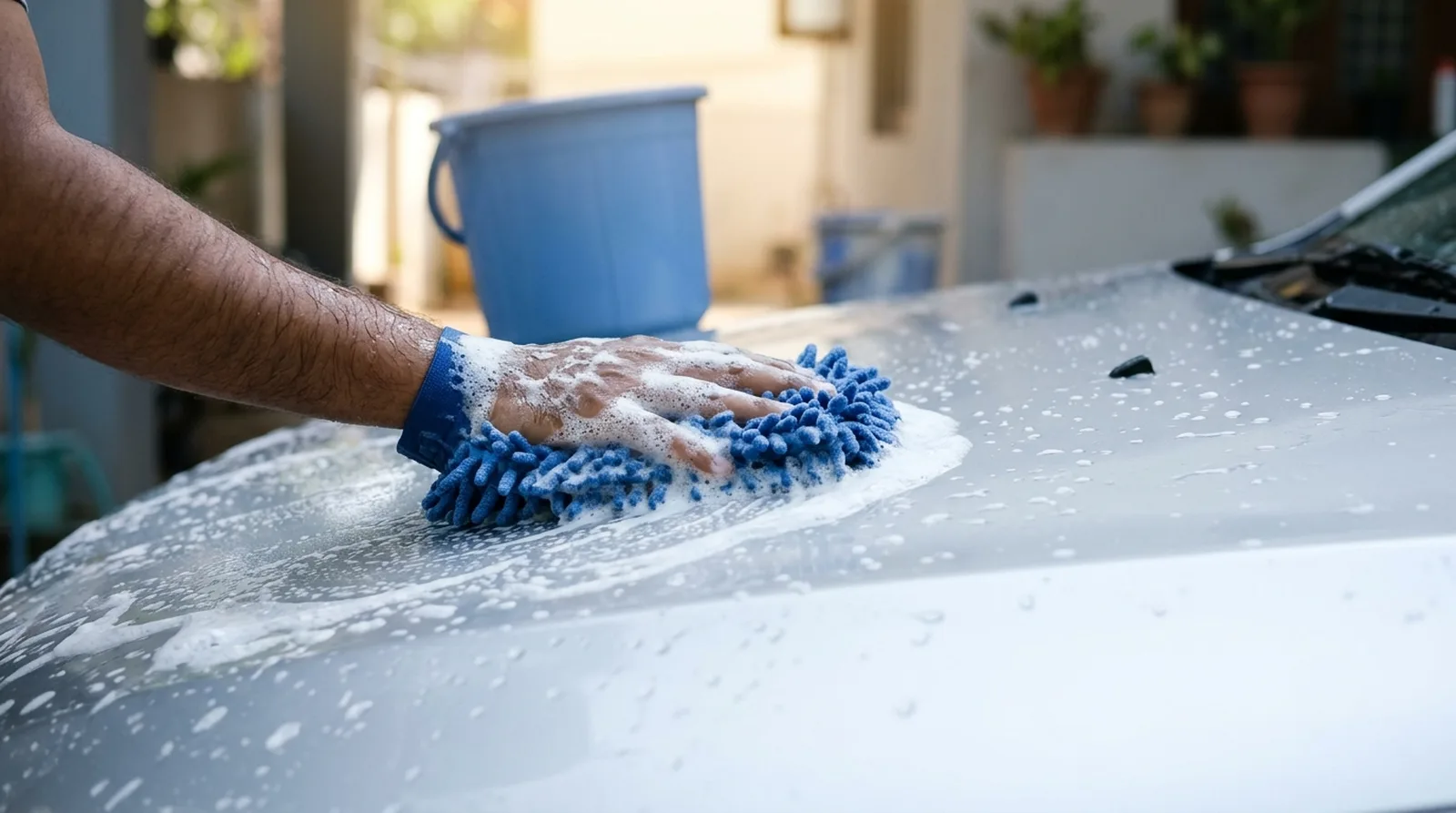
The blue "noodle" sponges sold online for ₹100–₹250 are usually chenille microfibre on a foam core. These are fine for paint if the strands are dense and soft. Check that the strands don't shed, the stitching is firm, and the back side isn't a hard scrubber meant for wheels or glass.
Tip: buy two. Use one for the body and keep a separate, older one for wheels and the lower parts of the car, which carry the most grit.
What you need for a home wash
- Two buckets (any clean ones will do); a grit guard insert at the bottom is a useful extra.
- A chenille or microfibre wash mitt for the body, and a separate cloth or brush for wheels.
- pH-neutral car shampoo, not dish soap or washing powder.
- Two or three microfibre drying towels, ideally a large waffle-weave towel.
- A hose, sprayer or pressure washer for rinsing; see our pressure washer guide if you are thinking of buying one.
The two-bucket wash, step by step
- Park in the shade, or wash early morning or evening. Hot paint dries soap and water too quickly and leaves marks.
- Rinse the whole car to remove loose dust and mud before anything touches the paint.
- Fill two buckets: one with car shampoo mixed as the label says, one with plain water.
- Wash from the top down: roof, glass, bonnet and boot, then upper doors, and lower panels last.
- Work one panel at a time with light, straight strokes. Let the mitt glide; don't scrub.
- After each panel, rinse the mitt in the plain-water bucket, squeezing and rubbing it to release grit, then dip it back in the soap.
- Rinse each section before soap dries on it.
- Wheels last, with their separate cloth or brush.
- Dry promptly with a clean microfibre towel, laying it flat and patting or gently pulling it across, rather than rubbing hard.
Soap and water: two common mistakes
Dish soap or washing powder. These are made to cut grease. On a car they can strip wax or other protection and may leave residue. A pH-neutral car shampoo costs a little more but is made for the job.
Letting water dry on the car. Many Indian homes use hard borewell water, which leaves white mineral spots when it dries on paint and glass, especially in the sun. Wash in the shade, rinse and dry one section at a time if needed, and dry the car fully. For the final rinse, softer water (such as stored rainwater or RO-filtered water; not the RO reject water, which is harder) can help, but drying properly is what matters most.
Caring for your mitt and towels
- Rinse the mitt thoroughly after every wash and squeeze it out.
- Machine or hand wash microfibre separately in warm water with a mild detergent.
- No fabric softener: it clogs the fibres and makes them less absorbent.
- Air dry, then store in a clean bag or box, away from dust.
- Replace the mitt when the strands mat down, go stiff or start shedding.
- Dropped it on the floor? Clean it before it touches the paint again.
Final word
A chenille or microfibre mitt, two buckets, a proper car shampoo and a few clean towels are all most people need to wash a car well at home. Rinse first, wash top to bottom in the shade, rinse the mitt after every panel and dry the car promptly. If your car stays outdoors, a well-fitted cover between washes also helps; see our car cover buying guide.
This guide is general information. It does not refer to any particular brand, seller or listing. Always follow the instructions on the shampoo and on your car's paint protection, if it has a coating.
How we made this guide
- Facts checked against 3 sources, listed at the end of the guide.
- Last updated November 5, 2026. We revise guides when rules and prices change.
Frequently asked questions
Is a car wash sponge or a microfibre mitt better?
A microfibre or chenille mitt is generally safer for paint. A flat sponge face can trap grit and drag it across the surface, which causes swirl marks. A deep-pile mitt pulls dirt into its fibres, away from the paint. Whatever you use, rinsing it often is what prevents scratches.
Can I wash my car with dish soap or washing powder?
It's best not to. Dish soap and detergents are made to cut grease and can strip wax or other protection from the paint, and some leave residue. A pH-neutral car shampoo is made to clean while being gentler on the finish.
What is the two-bucket method?
You use one bucket of car shampoo solution and a second bucket of plain water. After washing each panel, you rinse the mitt in the plain-water bucket before dipping it back into the soap. This keeps the dirt you have removed out of your wash water, so you don't rub it back onto the car.
Why does my car get white spots after washing?
Those are usually water spots: minerals left behind when hard water, such as many borewell supplies, dries on the paint. Wash in the shade, work one section at a time so soap and water don't dry on the car, and dry it promptly with a clean microfibre towel.
What should I do if I drop the wash mitt on the ground?
Stop using it on the paint. Grit picked up from the floor will scratch. Rinse it thoroughly, or better, switch to a spare clean mitt and wash the dropped one properly later.
How do I clean a microfibre mitt?
Rinse it well after each wash. Wash it separately or with other microfibre, in warm water with a mild detergent, without fabric softener, which clogs the fibres. Let it air dry and store it in a clean bag so it doesn't pick up dust.