Is a Private Omni Bus Profitable? Bus Price, Diesel, Occupancy and Permits Worked Out
A full AC sleeper bus on a festival night can clear about ₹80,000 after costs. On an ordinary weekday at 60% occupancy, the same bus loses money. Private bus economics is a game of occupancy, diesel and permits, and safety decides whether an operator lasts. Here are the real numbers.
- 90% seats filled₹2,51,799
- 80% seats filled₹1,29,759
- 75% seats filled₹68,739
- 70% seats filled₹7,719
In this guide
- Quick answer
- Investment: what a bus costs
- The monthly cost of one bus
- How much the bus earns
- Festival nights: where the year is made
- Two ways to run a bus
- How tickets reach redBus and other apps
- Permits and the state tax problem
- Safety: the risk that ends businesses
- Before you invest
- Final word
- Frequently asked questions
Quick answer
- Investment: about ₹60–75 lakh for a Tata or Ashok Leyland AC sleeper; ₹1.3–2 crore for premium Volvo-class coaches. EMI on a ₹70 lakh bus is about ₹1.34 lakh a month.
- Diesel decides costs: about ₹14,000 per Chennai–Madurai trip at 3–3.5 km per litre.
- Occupancy decides profit: in our example, about ₹69,000 a month at 75% occupancy, ₹2.5 lakh at 90%, and a loss below about 70%.
- Festivals rescue the year: one full night at festival fares can clear about ₹80,000.
- Permits and safety are the biggest risks: AITP fee of ₹90,000 a quarter plus state tax disputes, and fire safety that can end a business overnight.
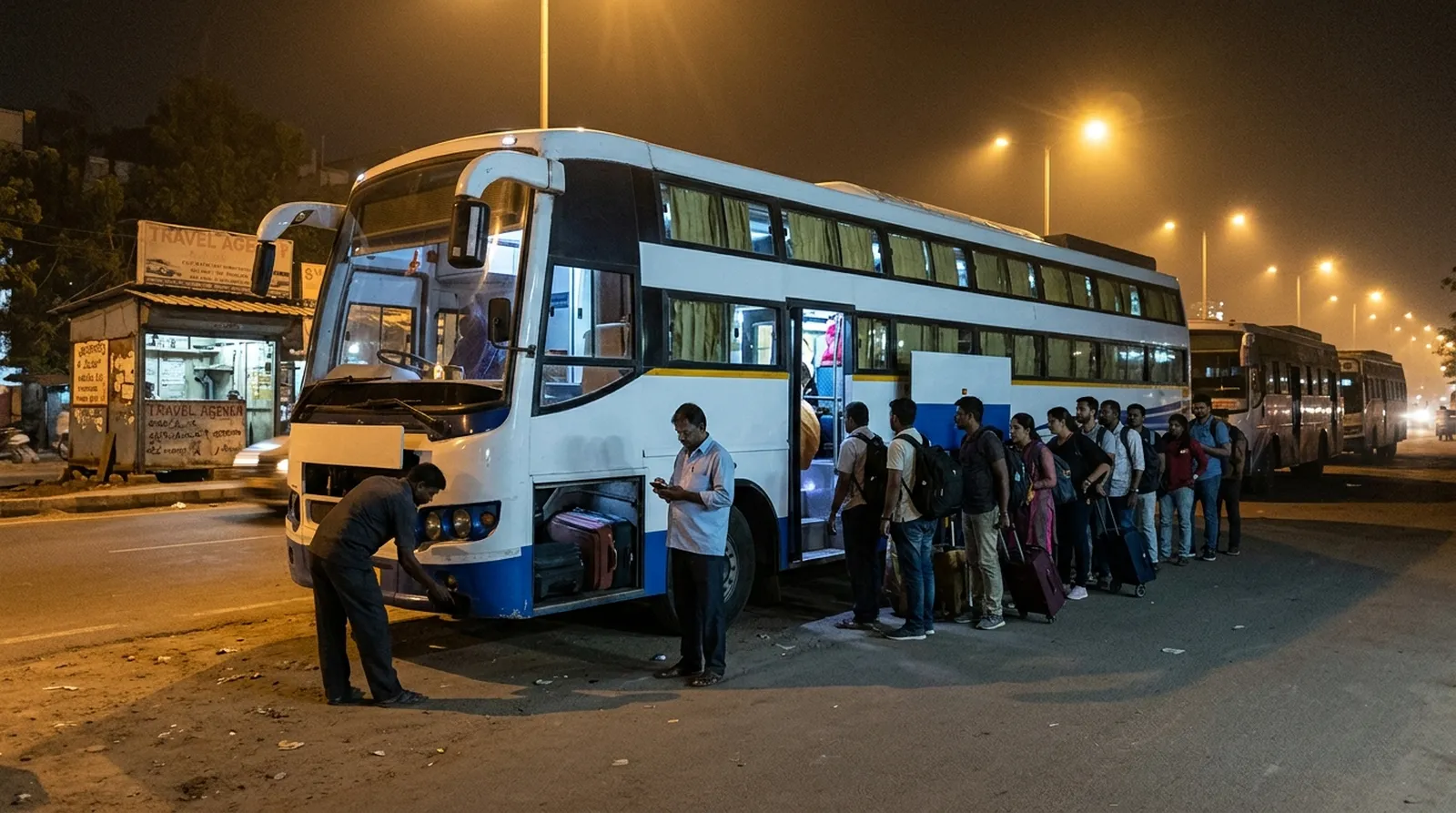
Overnight private buses, called "omni buses" in Tamil Nadu, carry lakhs of passengers between Chennai, Madurai, Coimbatore, Bengaluru and beyond every night. From outside, a full bus looks like easy money. Inside, it's a business of large loans, heavy diesel bills and thin margins.
Investment: what a bus costs
| Type | Approx. price | Notes |
|---|---|---|
| Tata / Ashok Leyland chassis with AC sleeper body | ₹60–75 lakh | Bodies commonly built in Namakkal and Karur |
| Premium coaches such as BharatBenz or Volvo | ₹1–1.5 crore | Better ride and fuel systems, higher EMI |
| Top-end multi-axle sleepers such as Volvo 9600 | ₹1.3–2 crore+ | Premium routes and fares |
Around 90% of operators buy on loans. For a ₹70 lakh bus with a ₹63 lakh loan at 10% for 5 years, the EMI is about ₹1.34 lakh a month. Premium buses carry EMIs of ₹2.5–3.5 lakh. The EMI is due whether the bus runs full, half-empty or sits idle during a strike.
The monthly cost of one bus
Assume a 30-berth AC sleeper running Chennai–Madurai (about 460 km) one way every night, 30 trips a month:
| Cost | Assumption | Per month |
|---|---|---|
| Diesel | 3.25 km per litre, ₹99.55 a litre | about ₹4.23 lakh (₹14,090 per trip) |
| Loan EMI | ₹63 lakh at 10%, 5 years | about ₹1.34 lakh |
| Staff | two drivers taking turns, plus cleaner and allowances | about ₹90,000 |
| Tolls, tyres, air suspension, insurance, road tax | combined | about ₹1.75 lakh |
| Booking software, office, cleaning | combined | about ₹25,000 |
| Total | about ₹8.47 lakh |
That's about ₹28,000 per trip before the bus earns a rupee. Diesel is half the cost. Heavy AC sleepers give only about 3–3.5 km per litre because of their weight and constant air-conditioning.
How much the bus earns
At an average fare of ₹1,500 per berth, with about 80% of tickets sold online at a 12% commission, the chart near the top shows monthly profit by occupancy:
- 90% full: about ₹2.5 lakh profit a month.
- 80% full: about ₹1.3 lakh.
- 75% full: about ₹69,000.
- 70% full: roughly break-even.
- 60% full: a loss of about ₹1.1 lakh.
So gross ticket revenue is usually ₹8–11 lakh a month, not ₹3–4 lakh. A bus earning only ₹3–4 lakh a month wouldn't even cover its diesel. The ₹3–4 lakh figure is closer to what's left after diesel in a decent month.
Festival nights: where the year is made
On ordinary days, AC sleeper fares on popular routes run about ₹1,500–2,500. Around Deepavali, Pongal and long weekends, demand jumps and fares can reach ₹3,500–5,000.
A full 30-berth bus at ₹4,000 a berth grosses ₹1.2 lakh. After commissions and the night's running cost of about ₹28,000, that's roughly ₹80,000 profit in one night. A handful of such nights can cover the losses of weak weekdays and off-season months.
Festival pricing is also controversial. Passengers and governments push back on very high fares, and rules or caps can change. Don't build your plan on festival fares alone.
Two ways to run a bus
1. Your own route. You set the timings, sell tickets through counters and online platforms, and keep the fare. Higher upside, but you carry all the risk of low occupancy, diesel prices and competition.
2. Government Gross Cost Contract (GCC). State transport undertakings sometimes hire buses from private operators and pay a fixed rate per kilometre. The government collects the fares, and the contract sets who bears diesel and other costs. Income is steadier, but rates are fixed by tender and penalties apply for breakdowns and missed trips. Chennai's MTC, for example, has used private operators to own and run buses under such contracts.
How tickets reach redBus and other apps
Booking apps such as redBus and AbhiBus usually don't connect to each bus owner directly. Bus management software companies such as Bitla, Mantis and others hold the seat layout and push live availability to booking platforms, agents and the operator's own website.
- Commission: operators commonly report 10–20% per ticket on aggregator bookings, depending on negotiation.
- Your own website and repeat customers save that commission, which is why established operators push direct booking.
Permits and the state tax problem
The All India Tourist Permit (AITP) was meant to create "one nation, one permit" for tourist vehicles. Under the 2023 rules, a vehicle with 23 or more seats pays ₹3 lakh a year or ₹90,000 a quarter.
But states still collect their own motor vehicle taxes. In November 2025, inter-state private buses across South India were halted for days after Tamil Nadu, Kerala and Karnataka each charged heavy quarterly taxes on each other's AITP buses, and buses were impounded and fined. Check the current tax position of every state on your route before committing to an inter-state service.
Safety: the risk that ends businesses
Sleeper bus fires have killed passengers in recent years. In October 2025, a private sleeper bus caught fire near Kurnool in Andhra Pradesh after hitting a motorcycle, and at least 20 people died. Survivors said the main door jammed and there were no hammers to break the windows.
- No unofficial modifications: cheap extra wiring for lights and music systems causes short circuits and fires.
- Working emergency exits and window hammers on every bus, and staff who know how to use them.
- Fire extinguishers checked regularly; fire detection where required.
- Two rested drivers on long night routes, never one driver doing back-to-back nights.
- Regular checks of tyres, brakes, wiring and air suspension.
An operator with a safety record earns passenger trust and repeat bookings. One serious incident can mean cancelled permits, lawsuits and the end of the business.
Before you invest
- Choose a route with year-round demand, not just festival peaks.
- Model your occupancy honestly. Can you stay above 70–75% most nights?
- Keep 3 months of EMI and running costs as reserve for strikes, breakdowns and slow seasons.
- Check permits and state taxes on every state you'll enter.
- Plan direct bookings to reduce commissions.
- Make safety non-negotiable from day one.
Final word
An omni bus can make strong money on festival nights and busy routes, but most months are tight. Profit depends on keeping seats above about 70–75% full, controlling diesel and maintenance, and avoiding permit trouble. Start with honest numbers, keep cash in reserve, and treat passenger safety as the foundation of the business, not an extra.
All figures are illustrative estimates based on October 2026 diesel prices and stated assumptions. Bus prices, fares, commissions, permit fees and state taxes change and vary by route and operator. Take advice from experienced operators and a CA before investing.
References
- OkCredit: How to start a private bus business in India, permit fees and bus prices
- WION: Tax dispute stalls inter-state private buses across South India
- Gulf News: How the Kurnool bus fire turned deadly
- DT Next: Private operators to own and ply 1,000 buses for MTC
- The Hans India: Diesel prices on 22 October 2026
How we made this guide
- Facts checked against 5 sources, listed at the end of the guide.
- Worked examples and calculations are our own, with the assumptions stated in the guide.
- Last updated November 2, 2026. We revise guides when rules and prices change.
Frequently asked questions
How much does a private sleeper bus cost?
A Tata or Ashok Leyland chassis with an AC sleeper body built in Namakkal or Karur typically costs about ₹60–75 lakh. Premium multi-axle coaches such as a Volvo 9600 range from about ₹1.3 crore to ₹2 crore or more.
What is the EMI on a bus loan?
For a ₹70 lakh bus with a ₹63 lakh loan at 10% for 5 years, the EMI is about ₹1.34 lakh a month. Premium buses of ₹1.3–2 crore can carry EMIs of ₹2.5–3.5 lakh a month.
How much diesel does an omni bus use on Chennai to Madurai?
A heavy AC sleeper bus gives about 3–3.5 km per litre. For roughly 460 km one way at ₹99.55 a litre, diesel costs about ₹13,000–15,000 per trip.
How much does an omni bus earn per month?
Gross ticket revenue for a 30-berth AC sleeper running every night is often ₹8–11 lakh a month. After diesel, EMI, staff, tolls, maintenance, tax and commissions, our example earns about ₹69,000 a month at 75% occupancy, about ₹2.5 lakh at 90%, and loses money below about 70%.
What is the AITP permit fee for buses?
Under the All India Tourist Vehicles (Permit) Rules, 2023, a vehicle with 23 or more seats pays ₹3 lakh a year or ₹90,000 a quarter. States may still charge their own motor vehicle tax, which has led to disputes and strikes between Tamil Nadu, Kerala and Karnataka.
What is the GCC model for private buses?
Under a Gross Cost Contract, a state transport undertaking hires buses from private operators and pays a fixed rate per kilometre. The government collects the fares, and contracts often specify who bears diesel and other costs. It gives steadier income than running your own route, but rates are set by tender and penalties apply for breakdowns.