Sewing Machine Buying Guide: For Home Use or a Tailoring Business
A ₹3,000 second-hand machine is perfect for home stitching and a poor choice for a tailoring shop. Here is how to match the machine to the work, what to check before you pay, and how tailors can fund one.
In this guide
Quick answer
- Home stitching and alterations: a domestic machine with a small motor. A good second-hand one costs about ₹2,500 to ₹5,500.
- Starting a tailoring business: an industrial lockstitch machine with a servo motor. It is faster, handles thick cloth and saves electricity.
- Need money for it? Tailors can look at PM Vishwakarma (₹15,000 toolkit incentive, loans at 5%) or a Mudra loan.
The biggest mistake buyers make is choosing on price alone. A cheap machine bought for a business slows you down every day; an expensive industrial machine bought for occasional home stitching wastes money and space. Start with what you will sew and how many hours a day.
The four types of sewing machine
| Type | What it is | Best for | Watch out for |
|---|---|---|---|
| Manual (hand or treadle) | No motor; you power it by hand or foot | Light home use, areas with frequent power cuts | Slow and tiring for regular work |
| Domestic with motor | The same machine with a small electric motor and foot pedal | Home stitching, alterations, blouses | Not built for long daily hours |
| Electronic / computerised | Built-in stitch patterns, buttonholes, embroidery | Hobby, design and decorative work | Costlier; repairs need trained service |
| Industrial | Heavy machine on its own table and motor | Tailoring shops, boutiques, small units | Needs space, a stable table and more power |
For home use
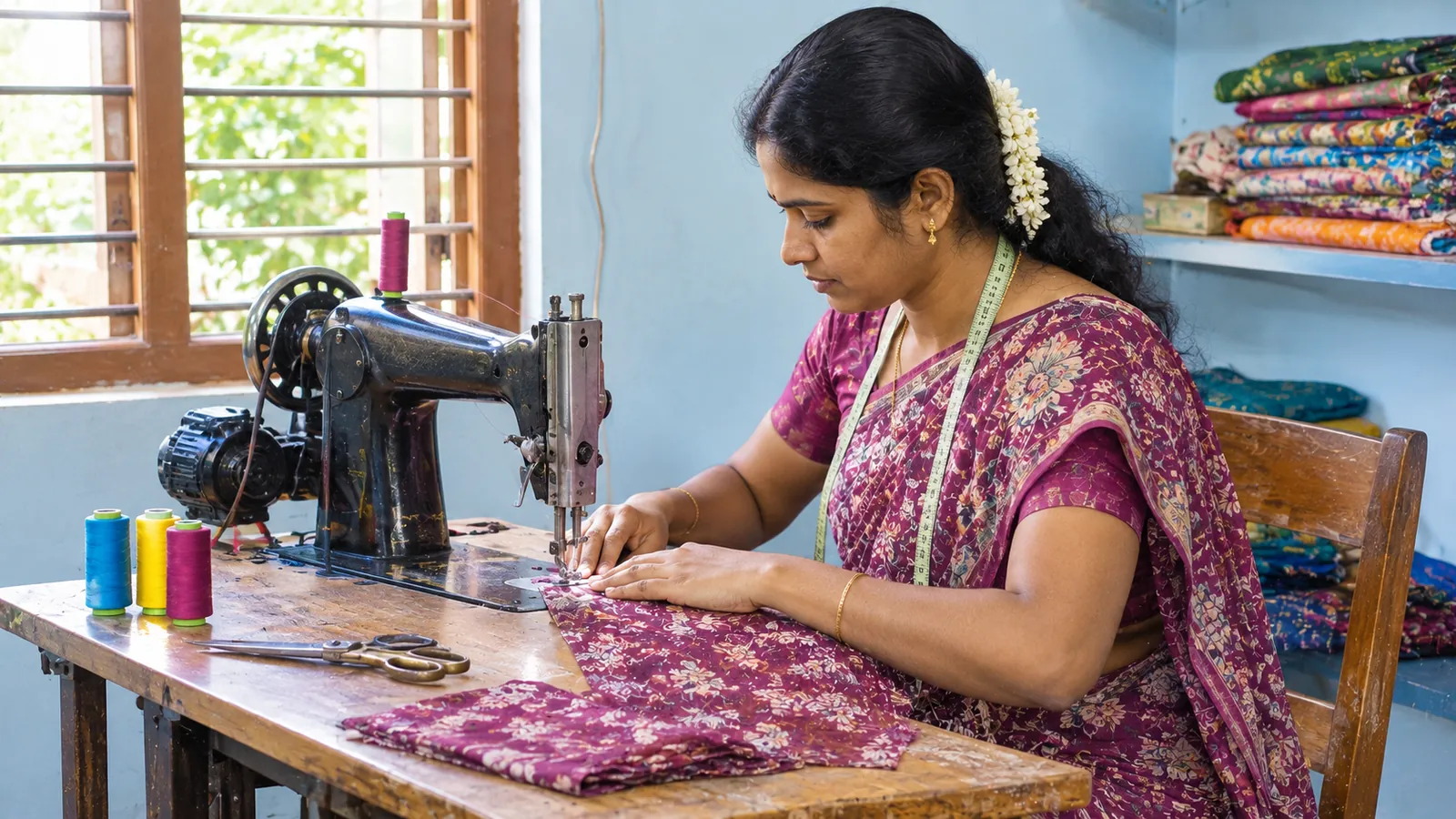
A domestic machine with a motor covers almost everything a household needs. The motor saves effort and lets you control speed with the foot pedal. Many buyers start with a second-hand machine, which costs much less and works well if checked properly.
Buy an electronic machine only if you want built-in embroidery, decorative stitches or automatic buttonholes. For plain stitching and alterations, it adds cost without adding value.
For a tailoring business
A shop needs speed, strength and a machine that runs for hours. That means an industrial single-needle lockstitch machine. As your work grows, add an overlock machine to finish edges neatly.
Servo motor or clutch motor
| Feature | Clutch motor | Servo motor |
|---|---|---|
| Power when the needle is still | Runs at full power all the time | Almost none (about 1 W on standby) |
| Power while sewing | Full rated power | In proportion to speed |
| Speed control | Hard; needs an experienced hand | Easy and precise, adjustable speed |
| Heat and overload | Prone to heating when it stalls | Much less likely |
Since the needle is resting most of the working day, a servo motor saves a large share of the electricity a clutch motor wastes. It is also far easier for a new tailor to control. For a new purchase, choose servo.
Checking a second-hand machine
Second-hand machines are good value, but test in person before you pay:
- Hand wheel: turns smoothly, with no grinding or stiffness.
- Stitch test: sew on thin cloth and on thick cloth such as denim. Stitches should be even on both sides, with no skipped stitches.
- Bobbin and bobbin case: no rust, cracks or loose fit.
- Feed dogs: the teeth under the needle should move the cloth evenly.
- Motor and pedal: speed changes smoothly with the pedal; the motor doesn't smell, spark or overheat.
- Rust and loose parts: check underneath the machine too.
- Parts availability: make sure needles, bobbins, belts and common parts are still sold for that model.
- Bill or written note: ask for one, with any warranty the seller offers.
Running it during power cuts
Domestic sewing machine motors are small, usually around 100 to 200 watts, so a normal home inverter can run one through a power cut. For an industrial machine, ask the seller for the motor's rating and choose an inverter with capacity to spare.
If power cuts are long and frequent, a solar-plus-battery setup can keep the machine, lights and a fan running, but it costs considerably more. A manual or treadle machine is the zero-electricity fallback.
Loans and support for tailors
PM Vishwakarma
Tailoring (darzi) is one of the trades covered by this central government scheme. Benefits listed by banks include:
- A ₹15,000 toolkit incentive to buy improved tools.
- Collateral-free loans at 5% interest: up to ₹1 lakh in the first tranche and up to ₹2 lakh in the second.
- Training with a daily stipend of ₹500, plus a certificate and ID card.
You must be 18 or older and should not have taken a PMEGP, PM SVANidhi or Mudra loan.
Mudra loan
For a small tailoring business, Mudra loans are available without collateral through banks and other lenders:
| Category | Loan amount |
|---|---|
| Shishu | Up to ₹50,000 |
| Kishor | Above ₹50,000 up to ₹5 lakh |
| Tarun | Above ₹5 lakh up to ₹10 lakh |
| Tarun Plus | Above ₹10 lakh up to ₹20 lakh |
Tip: ask the shop for a formal quotation with the machine model, motor, table and price. Banks need it to process an equipment loan, and most sellers will provide one.
Scheme rules change; confirm the current terms with your bank before you apply.
Final word
Match the machine to the work. For home stitching, a well-tested second-hand domestic machine with a motor is the best value. For a tailoring business, buy an industrial lockstitch machine with a servo motor, plan for power backup, and use PM Vishwakarma or a Mudra loan if you need funding.
Prices are approximate and vary by seller, model and condition. Loan and scheme details are for general information; confirm current terms with your bank.
Frequently asked questions
Which sewing machine is best for home use?
For alterations, blouses and children's clothes, a domestic machine with a small motor is enough. A good second-hand one costs around ₹2,500 to ₹5,500 with a motor. Choose an electronic machine only if you want built-in embroidery and decorative stitches.
Which sewing machine should I buy to start a tailoring business?
An industrial single-needle lockstitch machine with a servo motor. It sews faster, handles thick fabric, runs for hours and uses less electricity than a clutch-motor machine. Add an overlock machine later as work grows.
What is the difference between a servo motor and a clutch motor?
A clutch motor runs at full speed all the time the machine is on, even when the needle is still. A servo motor draws almost no power when idle, uses power in proportion to speed and lets you control speed precisely. Servo motors save electricity and are easier for beginners.
Can a sewing machine run on an inverter during power cuts?
Yes. Domestic sewing machine motors are small, usually around 100 to 200 watts, so a home inverter can run one. For an industrial machine, check the motor rating with the seller and make sure the inverter's capacity covers it with margin.
Is there a government loan for buying a sewing machine?
Tailors can apply under PM Vishwakarma, which lists tailoring as an eligible trade and offers a ₹15,000 toolkit incentive and collateral-free loans at 5% interest. Small businesses can also apply for a Mudra loan. Check current terms with your bank before applying.
Is it safe to buy a second-hand sewing machine?
Yes, if you test it in person. Check that the hand wheel turns smoothly, stitch on both thin and thick cloth, look for rust and loose parts, and make sure spare parts are still available for that model.